Harvest Season in the Cordillera
Six weeks on the fincas of Quindío during the main cosecha: the mathematics of a kilo of cherries, the jeeps that hold an economy together, and what climate change looks like from a slope at 1,800 metres.
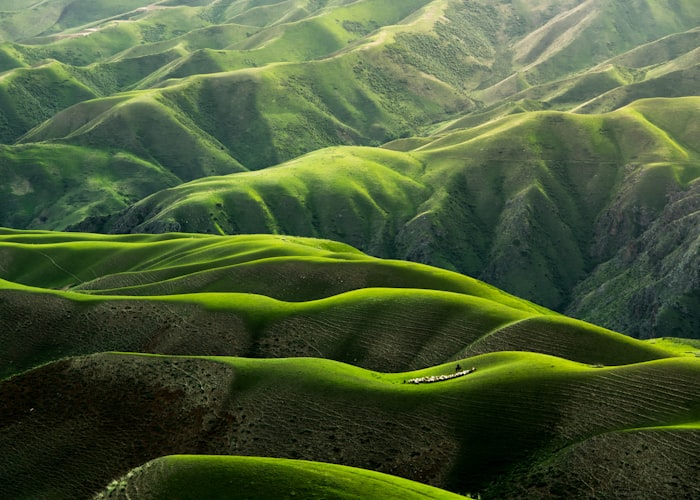
The pickers arrive before the mist lifts, and from the farmhouse porch you hear them before you see them — laughter, a radio playing vallenato, machetes tapping against rubber boots on the climb. By the time the sun clears the ridge above Salento, forty people have dissolved into the green corduroy of the slope, and the only evidence is the trees shaking here and there, as if the hillside had a pulse. A basket fills. A voice calls a running total. Somewhere below, a jeep grinds up the switchbacks with the day’s first load of empty sacks.
This is the cosecha principal, the main harvest, October to December in Quindío, when the hills between Armenia, Salento and Filandia produce the cherries that will become — eighteen months and nine thousand kilometres later — someone’s single-origin pour-over in Berlin or Portland, described on a chalkboard in words the picker will never read. I spent six weeks photographing the season, from first flower to export mill. The distance between the two ends of that supply chain is the story, and nobody on this end is confused about it.
The arithmetic of a slope
Colombian coffee is picked entirely by hand, cherry by cherry, and this is not romanticism — it is topography. The slopes that make the flavour, the volcanic soils at 1,200 to 2,000 metres with their cool nights and long ripening, are simply too steep for machines. Brazil harvests by shaking whole trees onto tarpaulins, ripe and unripe together; Colombia’s quality premium exists because a human hand takes only the red cherry and comes back next week for the rest. The premium is real. The question the axis lives with is who captures it.
A fast picker — and the fast ones are astonishing, hands blurring like card dealers, both sides of the row at once — clears 120, sometimes 150 kilos of cherry on a good day. It takes roughly five kilos of cherry to make one kilo of dried parchment coffee, and nearly seven to make a kilo of roasted beans. The picker is paid per kilo collected; in a good season the day’s total comes to somewhat less than the price of two specialty lattes in the cities where the beans are heading. Nobody here needs the comparison explained. Several pickers made it to me unprompted, with arithmetic and without bitterness, the way you state a fact about weather.
The pickers themselves are a floating nation. Perhaps a third are locals; the rest follow the harvests around the country — Huila in one season, Quindío the next, strawberries in Cundinamarca between — sleeping in farm dormitories, remitting by phone, carrying their whole economy in a canvas bag and a pair of boots. The best of them are courted by farms the way clubs court strikers, and they know their worth to the kilo.
Everyone in the world knows Colombian coffee. Almost nobody knows a Colombian coffee farmer.
A day in the rows
I picked for one morning, by invitation and to general entertainment. The strap of the basket — the coco, worn at the waist — finds muscles no gym addresses. The slope is a ladder of mud. The cherries resist just enough to make speed a skill: thumb and twist, not pull, or you take the stalk and damage next year’s node. After three hours I had eleven kilos, a sunburn, and a new relationship with every coffee I have drunk since. The woman working the row beside me, sixty if she was a day, had forty-two kilos and was singing.
Lunch comes up the hill in steel pots — rice, beans, a heroic amount of plantain — and is eaten in the shade rows with the day’s gossip. Then the afternoon shift, until the light goes flat and the weighing begins: each picker’s sacks onto the scale hung from a beam, numbers chalked on a board, the day’s money counted into hands stained cherry-red. The board is public. The arithmetic of a slope, posted daily.
From cherry to parchment
What happens next, in the beneficio behind the farmhouse, decides whether the day’s picking becomes commodity or specialty. The cherries go through the despulpadora — a hand-cranked or motor-driven mill that strips the fruit from the seed — then into fermentation tanks overnight, where the remaining mucilage breaks down and, managed well, the cup’s acidity is born. Then washing, floating off the defects, and onto the drying beds: raised racks under plastic roofs, or the flat rooftops — elbas — that give the region’s farmhouses their silhouette. The parchment coffee is turned by hand, hourly, for days, like something between agriculture and baking.
Every stage can rescue or ruin the lot, and the margins live in the details: hours of fermentation, thickness on the drying bed, the week’s humidity. The farms that have crossed into specialty prices — and Quindío has many now — obsess over these stages with lab thermometers and notebooks. The reward for getting it right is a price decoupled, finally, from the commodity market’s moods.
The price of everything
Because the mood matters: the reference price for a farmer’s standard lot is still set by the New York C contract — a futures market moved by Brazilian frosts, Vietnamese rain and fund algorithms, none of which have visited Quindío. The Federación’s daily internal price, posted in every town, translates New York into pesos per carga; the farmer checks it on a phone in the drying shed the way sailors check weather. A frost in Paraná can pay for a new roof here. A good algorithm year somewhere can undercut a perfect harvest.
This is why the specialty turn is not gourmet vanity but exit strategy. A named-lot coffee sold on quality contract — to a Bogotá roaster, a Berlin importer, the farm’s own tourists — escapes the C price entirely. The cooperative in Salento walks farmers through the paperwork; the young agronomists coming back from university push fermentation experiments their grandfathers find heretical and their buyers find delicious. The heresy pays double.
The jeeps
Holding the whole system together, physically, is the Willys. The war-surplus jeeps arrived in the 1950s, when the US sold off its Korea stock, and the axis discovered they were the only vehicles that agreed with its roads. Seventy years on they are the region’s pack animal, school bus and freight line in one — restored, repainted, blessed by the parish priest on the feast of the Virgen del Carmen, and loaded in harvest season past all engineering: sixty arrobas of coffee, a sofa, three generations, a dog on the spare wheel.
In Calarcá each June they hold the Yipao, a parade and contest of improbably loaded jeeps, including a category for driving on two wheels. It is exactly as wonderful as it sounds, and it is also, quietly, a trade fair: the jeep that carries the most coffee is an advertisement for somebody’s harvest. Transport as folklore, folklore as logistics.
The cupping room
Every beneficio of ambition now has a cupping table, and sitting in on a session recalibrates your palate for good. The ritual is precise: beans roasted to a standard curve, ground into numbered bowls, water at ninety-three degrees, a crust broken at four minutes with three sniffs and a spoon. The catadores — several of the best in the region are women in their twenties, certified in Armenia, poached by exporters — score aroma, acidity, body, balance and defects on the same 100-point scale used in Melbourne or Oslo. Except here the farmer stands behind your chair, and the score decides whether the lot ships as anonymous blend filler or as a named single origin at three times the price.
Visitors can book a cupping in Salento, Filandia or Armenia for the price of a city brunch, and should: nothing else so quickly converts "coffee tourism" from marketing phrase to earned literacy. You will taste the difference between washed and honey process by the second bowl and start recognising farms by the fourth. Go once as a tourist; you will leave as a partisan of somebody’s hillside.
Uphill, every year
The elegant fincas at 1,400 metres, the ones on the postcards with the begonia balconies, are increasingly the past tense of Colombian coffee. Rising temperatures push the optimal band for arabica uphill by a few metres every year, and with it go the new plantings — toward 1,900, 2,000 metres, onto colder, steeper, riskier land that previous generations left in forest. La roya, the leaf rust that thrives in warmth, shadows the retreat; the devastating outbreak of 2008–2012 forced the replanting of half the country in resistant varietals, and the breeders at Cenicafé — the federation’s research station, one of the world’s best — now run a permanent arms race against the climate.
Talk to three generations on one farm and the arc is plain. The grandfather planted by the moon and picked the same weeks his father had. The son replanted twice — once for rust, once for price. The granddaughter, agronomy degree in hand, talks about water stress, shade canopies, and whether the farm’s altitude buys twenty years or forty. Nobody at any altitude uses the word "if". The question on the slope is only how fast, and who can afford to follow the crop uphill.
The town the harvest built
The pueblos of the axis run on the harvest’s clock, and living in one through the season is like boarding in a theatre during a long run. Salento’s plaza fills on Friday nights with pickers in clean shirts, wages in pockets, the pool halls loud and the empanada window queues ten deep. The tejo courts — Colombia’s national game of throwing steel pucks at gunpowder targets, a sport whose scoring unit is the explosion — thunder from the back streets, beer crates emptying beside them, since by hallowed convention the beer is the entry fee. Filandia, quieter and prouder, watches its rival’s tourist boom with a raised eyebrow and keeps its basket-weaving workshops working for buyers who know.
The architecture is the harvest’s legacy too: the bahareque construction — earthquake-flexible walls of bamboo and daub, balconies painted in the competing palettes of political parties long reconciled — went up in the coffee bonanza a century ago, and UNESCO listed the whole cultural landscape, farms and towns together, as a single living monument. It is a working listing, not a museum one. The paint gets renewed; the farms behind the facades still ship.
Even the food calendar bends to the cosecha. The fondas along the farm roads — part shop, part bar, part news exchange — stock up for the picking months; the trout farms above Salento and the giant patacón that comes with every plate absorb the weekend wages; and the year’s rhythm, Christmas bonuses to Easter lull, tracks the drying beds as much as the church calendar.
Nights in the dormitories
After the weighing, the farm’s day winds down in a way that has not changed much in fifty years: dinner in shifts at the long table, phones on the one good windowsill for signal, a guitar if anyone brought one, and the dormitory lights out early because the slope starts again at six. The pickers’ economy runs through those phones — wages remitted the same night to families two departments away, harvest jobs scouted in group chats, the next farm booked before this one finishes. A good cuadrilla, a picking crew that works well together, stays together across seasons and farms, its leader negotiating rates for the group like a small union with boots.
Farms compete for the good crews on more than the per-kilo rate: the quality of the cook is legendary lore across the region, and a farm that feeds well recruits well. So does one that pays same-day without arithmetic games at the scale. The pickers rank them all, in the group chats, with the precision of guidebook reviewers — which, in the only sense that matters here, they are.
The federation and the price floor
No account of Colombian coffee survives without the FNC — the Federación Nacional de Cafeteros, the growers’ federation that has organised the sector since 1927 and functions in the axis as something between a cooperative, a bank, a research institute and a parallel state. It guarantees purchase of every farmer’s crop at the posted price — the floor that keeps a bad market from becoming a famine — runs the Cenicafé research station whose rust-resistant varietals saved the industry, extends credit through rural branches, and spent a century building the brand equity that a fictional farmer named Juan Valdez carries worldwide. The farmers complain about it, elect it, and would defend it against any government; it is theirs.
The guarantee price is why the axis survived the market’s worst years intact while other coffee lands hollowed out. The specialty premium is why its next generation might do better than survive. The two systems — floor and ladder — coexist on every farm, and understanding both is understanding rural Colombia’s central economic argument, conducted daily in the drying sheds.
The birds in the shade
Walk the rows with your ears open and the second economy of a good farm announces itself. Traditional coffee here grows under shade — guamo trees, plantains, native canopy — and shaded coffee land is functionally a forest: tanagers and toucanets working the upper storey, motmots on the wires, and, in the northern winter, an influx of migratory warblers that link this slope to backyards in Canada. Ornithologists rank shade coffee among the most bird-rich agricultural systems on earth, and Colombia, with more bird species than any country, is its capital. Several fincas now run dawn birding walks between harvest shifts; the same landscape sells twice, once by the kilo and once by the binocular.
The shade question is also an economic argument in progress. Full-sun varieties yield more and rust less; shade buys resilience, quality, biodiversity and the premiums attached to all three. Every farm strikes its own balance, and asking a farmer where they stand on sombra will earn you twenty minutes of applied ecology with better examples than any lecture.
The women running the new wave
The specialty turn has a demographic engine worth naming: to a striking degree, it is run by women. The region’s cupping labs certify more catadoras than catadores in some cohorts; women’s grower associations — several born from widowhood in the conflict years — now export named lots under their own labels; and on farm after farm the agronomy degree belongs to a daughter. The machismo of the old coffee order is not gone, but the scoresheets are indifferent to it, and the scoresheets increasingly decide the price. Visitors who care can steer money the same way: ask the cooperative shops for the asociaciones de mujeres lots. They tend, not coincidentally, to be excellent.
From the slope to your cup
The last leg of the story leaves the axis by truck: parchment coffee to the dry mills of Armenia and Pereira, where it is hulled, sorted by size and density, hand-checked under lamps by the sharpest eyes in the industry, and bagged for the road to Buenaventura and the container ships. Eighteen months after a flower opened above Salento, the bean it made is ground in another hemisphere by someone who has never heard of Quindío. The whole journey — flower, cherry, tank, elba, mill, port, roaster, cup — fits inside the distance between a chalkboard’s tasting notes and the weighing board on the farm. Both boards list numbers. Only one of them has names attached, and now you have stood beside it.
A short glossary of the slope
The season speaks its own language, worth having in your pocket. A carga is 125 kilos of parchment coffee, the unit the posted price quotes; an arroba is 12.5 kilos, the unit the pickers’ scale counts. The mitaca is the smaller mid-year harvest, April to June, the main cosecha’s echo. The beneficio is the wet mill; the elba the rooftop drying deck; pergamino the parchment coffee that leaves the farm. Pasilla is the defect grade sold internally — and the honest cup most Colombians historically drank while the best beans sailed; the specialty movement’s quiet revolution is that the good coffee now stays, and the axis’s own cafés finally pour their own hills at their best.
Where to stand, if you come
For the visitor, the practical translation is simple and worth acting on. Come in harvest if you can — October to December, or the April–June mitaca — when the hills are working and the wet mills run. Stay on a working finca rather than a hotel: El Ocaso and Don Elias around Salento, Venecia near Chinchiná, and dozens of smaller farms take guests, feed them from the garden, and walk them through the season’s stage in progress. Pick for one morning, to earn your humility. Sit a cupping, to earn your vocabulary.
And buy at the farm gate — beans roasted that week, at prices that keep the margin on the mountain where the work happens. The bag will cost less than at the airport and mean more than any souvenir in the country. The coffee will taste different afterwards. Everything does, once you have seen the slope it came from, and met the hands that took it, cherry by cherry, off the tree.
Sara shoots on assignment across four continents and develops half of it on film. Her long-term project on harvest seasons — coffee, saffron, olives, rice — has been exhibited at Visa pour l’Image in Perpignan.